Organising service appointments in Bamako: a simple planning method
A day with several service appointments can become complicated when addresses, documents and contact details are scattered across messages. In Bamako, as elsewhere, a small planning sheet can help you keep the practical details together. This method does not predict traffic or replace current local safety information.
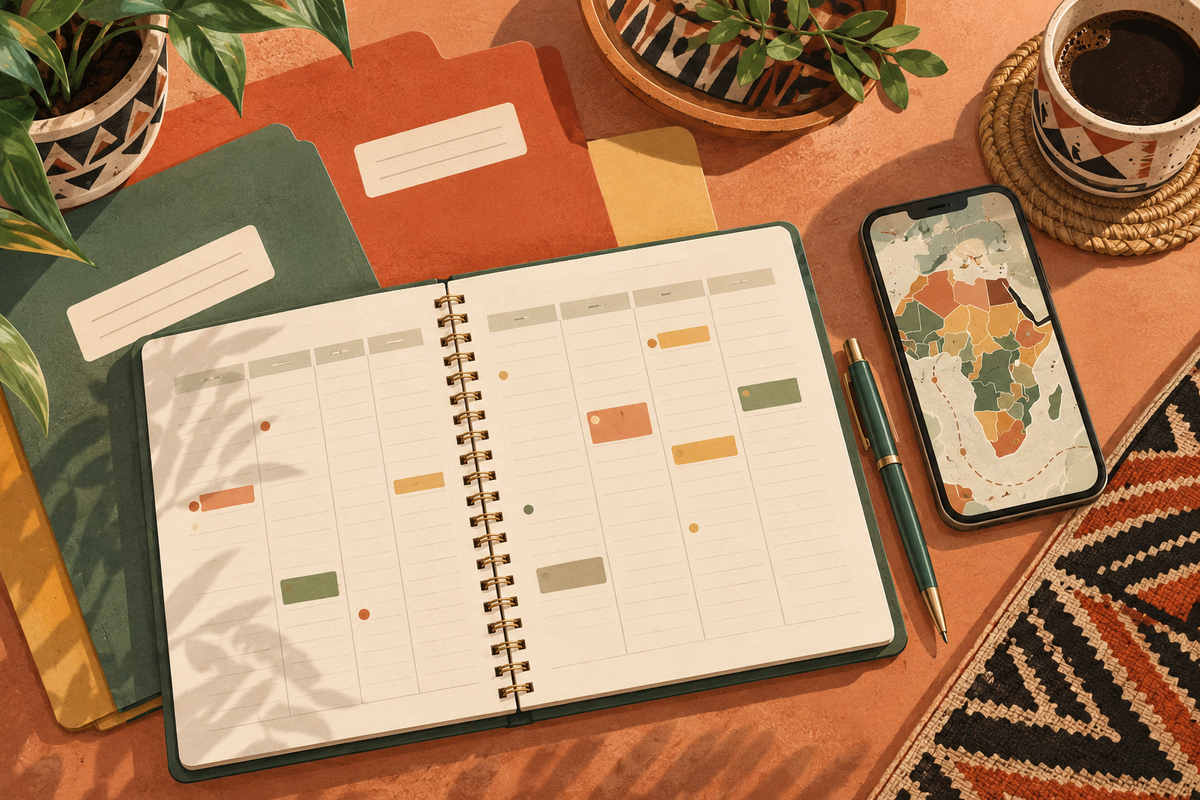
Cover: AI-generated editorial illustration for Africa Prisma; a generic scene, not a photograph of an identified person, institution or property.
Give each appointment its own entry
Record the organisation, purpose, confirmed time and person or department contacted. Add the exact location and any entrance instructions. If the appointment is only requested rather than confirmed, label it that way. The distinction prevents a tentative exchange from being mistaken for a booking.
Confirm what must happen beforehand
Ask whether you need to complete a form, bring copies or provide information in advance. Request the list directly from the service concerned. A checklist shared by another person may be useful, but it should not override the current instructions for your own appointment.
Group documents without exposing private information
Prepare one folder for the day, separating the papers for each visit. Keep originals and copies clearly distinguished. Store digital confirmations in an organised place and avoid sending identity or other sensitive documents to numbers whose ownership you have not verified.
Leave room between commitments
Plan the sequence using current route information and realistic flexibility. Do not schedule two visits so tightly that a small delay makes the second impossible. Keep the official contact details available so you can notify the relevant service if your plans change. No single travel-time estimate will suit every route or day.
End each visit with one next step
Before leaving, note what was completed, what remains and who is responsible for the next action. Ask how you will receive a response and whether you should follow up after an agreed date. File receipts and reference numbers with the same entry.
Your reusable planning sheet
- Appointment and status: requested or confirmed.
- Date, time and location.
- Official contact.
- Documents and preparation.
- Result of the visit.
- Next action, responsible person and date.
The goal is a clearer record, not a busier schedule. Review the sheet at the end of the day and update only the items that still need action.
Plan around dependencies
Some visits only make sense after another service has supplied a document or reference. Ask whether that dependency really applies to your case and note it beside the appointment. A confirmed time does not make a visit ready if a required preceding step is unfinished.
Separate appointments with fixed times from tasks that can be moved. If one visit overruns, you can then identify which later commitment needs a call and which task can wait. Use current information from the organisations and routes involved; this article provides no Bamako travel-time or opening-hour estimates.
A hypothetical two-visit day
Imagine that a person needs to collect a document and then take it to a second service. The first collection is requested but not confirmed; the second appointment is fixed. Before treating the day as settled, the person asks whether the document is ready and whether the second service needs the original or a copy. If the first step remains uncertain, the person discusses alternatives with the second service.
This example is a planning pattern, not a description of an official administrative procedure. The responsible service’s actual instructions determine what is required.
A working schedule
| Visit | Status | Dependency | Next action |
|---|---|---|---|
| Document collection | Requested | Readiness confirmation | Contact issuing service |
| Submission appointment | Confirmed | Correct document format | Clarify required original or copy |
Record changes in one place
When a booking changes, update the date, status and contact record together. Keep the old confirmation clearly marked as superseded instead of leaving two competing times in separate chats. If another person helps with transport or attendance, share only the practical details they need.
Before sending documents, verify the destination and the reason for the request. Keep private records out of group conversations or public forms. For a health visit, store clinical information separately and use our hospital preparation guide for the appointment folder.
Close the day with a short review
Mark completed tasks, unresolved questions and dates promised by the service. Identify the next action and responsible person for each open item. A receipt confirms what it says; it should not be treated as proof of a later decision that has not yet been issued. Keep reference numbers with the relevant entry so a follow-up starts from the actual record.
Related reading
← All stories